

The cultural practice of encouraging children to believe unlimited achievement is possible through dedication alone represents a double-edged sword in child development. Across numerous societies, this messaging forms a foundational belief system that influences how young people approach challenges and perceive failure.
While it undoubtedly builds character strengths such as resilience, determination, and strong work ethic, it simultaneously obscures the complex reality of success in modern societies where external factors—socioeconomic circumstances, systemic barriers, and genetic predispositions—play substantial roles. This essay will examine both the psychological benefits and potential harms of this philosophy before concluding that effective guidance requires balancing inspirational messaging with practical wisdom about achievement’s true nature.
Understanding the Essay Structure: Your Strategic Approach
Identifying the Question Type
This essay “in some cultures children are often told” falls into the discuss both views essay category, though it may appear as an advantages and disadvantages question depending on the specific wording. The prompt requires you to explore multiple perspectives on telling children they can achieve anything through hard work.
The question examines whether this cultural message serves children’s development effectively or creates unrealistic expectations. Your task involves analyzing both beneficial and potentially harmful aspects of this approach while presenting a balanced yet decisive viewpoint.
When approaching this topic, consider the psychological, social, and educational implications of such messaging. Think about how this belief system might influence children’s resilience, self-esteem, and relationship with failure across different cultural contexts.
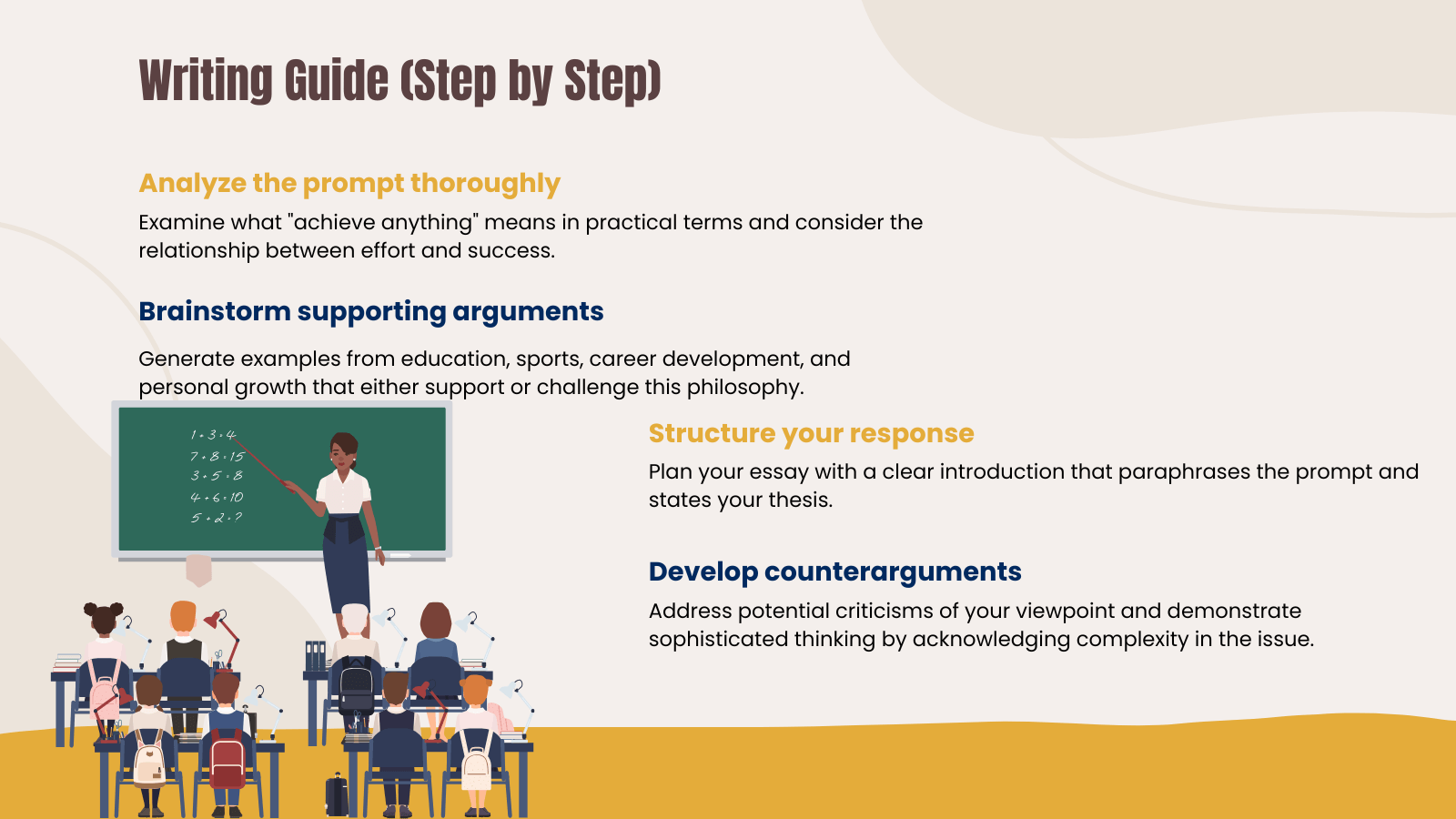
Outline for in some cultures children are often told topic
Introduction (35-40 words) Paraphrase the statement and present your thesis acknowledging both benefits and drawbacks of this cultural message. While encouraging effort builds resilience, unrealistic expectations may harm children’s psychological development.
Main body development for in some cultures children are often told:
Body Paragraph 1: Advantages (70-80 words) Focus on how telling children they can achieve anything through hard work builds essential qualities:
- Resilience and motivation development
- Strong work ethic formation
- Growth mindset principles adoption
- Examples of successful individuals overcoming obstacles
Body Paragraph 2: Disadvantages (70-80 words) Examine negative consequences of unrealistic expectations:
- Disappointment and anxiety when goals aren’t met
- External factors beyond individual control (socioeconomic barriers, natural aptitude)
- Mental health implications from excessive pressure
Body Paragraph 3: Balanced Approach (70-80 words) Present your reasoned opinion on optimal messaging:
- Moderate encouragement surpasses absolute statements
- In some cultures children are often told about effort’s importance, but messaging needs refinement
- Include realistic goal-setting and failure management strategies
Conclusion (25-30 words) Synthesize main points emphasizing that encouraging effort remains valuable when balanced with realistic expectations and coping strategies for setbacks.
(Total Target: 250-300 words)
Sample Essays for In Some Cultures Children Are Often Told: Three Levels of Achievement
Now let’s dive into three sample responses of “some cultures children are often told” topic with ieltssamplebanks.com
Band 5.5-6.5 Sample Essay
In many cultures, parents tell their children that hard work can help them achieve their dreams. This idea has good and bad points that I will discuss in this essay.
First, telling children they can achieve anything if they work hard has several advantages. This message makes children feel confident and motivated to try their best in school and activities. When children believe effort leads to success, they don’t give up easily when facing problems. For example, students who think hard work matters will study more for exams and practice sports longer. This attitude helps them develop strong work habits that benefit them throughout life.
However, this approach also has disadvantages. Sometimes children cannot achieve everything they want, even with hard work. Natural talent, family money, and other factors also affect success. When children believe only effort matters, they might feel very disappointed if they fail. This can cause stress and sadness. For instance, a student might work extremely hard to become a doctor but struggle with science subjects due to learning difficulties.
In some cultures children are often told that persistence guarantees success, but I believe parents should be more realistic. Children need encouragement, but they also need to understand that failure sometimes happens despite effort. Parents should teach children to work hard while also preparing them for disappointments.
In conclusion, while encouraging children to work hard builds good character, parents should balance this message with realistic expectations. This approach helps children develop resilience without creating unrealistic pressure that might harm their mental health.
Word count: 267
Band 6.5-7.5 Sample Essay
The belief that children can accomplish anything through sufficient effort represents a fundamental parenting philosophy prevalent across numerous cultures worldwide. While this approach offers considerable benefits for character development, it also presents potential drawbacks that merit careful consideration.
Encouraging children to believe in the power of hard work cultivates essential life skills and psychological resilience. When young people internalize the connection between effort and achievement, they develop persistence, determination, and a growth mindset that serves them throughout their educational and professional journeys. Research demonstrates that students who embrace effort-based thinking perform better academically and recover more quickly from setbacks. Moreover, this philosophy instills valuable work ethic principles that distinguish successful individuals across various fields, from entrepreneurship to athletics.
Nevertheless, the absolutist nature of this message can create unrealistic expectations that ultimately harm children’s psychological well-being. In some cultures children are often told that effort alone determines outcomes, yet this oversimplifies the complex interplay of factors influencing success. Socioeconomic circumstances, natural aptitudes, systemic barriers, and random opportunities significantly impact achievement levels regardless of individual effort. Children who fully embrace the “anything is possible” mindset may experience profound disappointment, self-blame, and diminished self-worth when encountering obstacles beyond their control.
A more nuanced approach balances encouragement with realistic perspective. Parents should emphasize effort’s importance while simultaneously teaching children about external factors, appropriate goal-setting, and healthy responses to failure. This strategy maintains motivation while protecting children from the psychological damage associated with unrealistic expectations.
In conclusion, while promoting hard work remains crucial for child development, responsible messaging requires acknowledging life’s complexities. Effective parenting combines optimistic encouragement with practical wisdom about achievement’s multifaceted nature.
Word count: 287
Band 7.5+ Sample Essay
The philosophical assertion that children can achieve any aspiration through dedicated effort represents a cornerstone belief system that permeates numerous cultural frameworks globally. This paradigm, while fostering admirable qualities such as resilience and determination, simultaneously raises profound questions about realistic expectation-setting and the psychological implications of potentially unattainable promises.
Proponents of this achievement-oriented messaging argue convincingly that such encouragement cultivates indispensable psychological foundations for success. When children internalize the correlation between sustained effort and positive outcomes, they develop what psychologists term a “growth mindset”—the belief that abilities can be enhanced through dedication and strategic practice. This cognitive framework enables young individuals to persist through academic challenges, embrace constructive feedback, and view obstacles as opportunities for development rather than insurmountable barriers. Furthermore, longitudinal studies indicate that children raised with effort-focused praise demonstrate superior academic performance, enhanced creativity, and stronger emotional regulation compared to those receiving ability-focused recognition.
However, the absolutist nature of this cultural messaging contains inherent risks that warrant serious consideration. In some cultures children are often told that determination alone guarantees success, yet this perspective dangerously oversimplifies the multifaceted nature of achievement in complex societies. Structural inequalities, genetic predispositions, socioeconomic constraints, and institutional biases create substantive barriers that individual effort cannot entirely overcome. Children who fully embrace the “limitless potential” narrative may experience devastating psychological consequences when confronting these systemic realities, including learned helplessness, depression, and impaired self-concept development.
The optimal approach requires sophisticated balance between motivational encouragement and realistic preparation for life’s inherent uncertainties. Rather than promising unlimited achievement, parents and educators should emphasize effort’s role in maximizing individual potential while simultaneously teaching children about external factors, appropriate goal adjustment, and constructive failure management strategies.
In conclusion, while cultivating a strong work ethic remains fundamental to child development, responsible guidance must acknowledge achievement’s complex interdependencies. Effective mentorship combines inspirational messaging with practical wisdom about navigating life’s inevitable challenges and limitations.
Word count: 324
>>Refer to more articles about children topic in IELTS writing:
- IELTS Writing Task 2: In Many Countries Children Are Engaged
- Writing Task 2: It Is Important for Children to Learn – Guide & Sample
- Writing Sample: Some People Believe That Allowing Children
Score-Boosting Tips and Traps You Should Avoid
Achieving excellence in IELTS writing task 2, especially this essay type requires demonstrating sophisticated understanding of cultural complexity and psychological nuance. Your response should move beyond simplistic pro-and-con arguments to explore the deeper implications of cultural messaging on child development.

1. Vocabulary Enhancement Strategies: Incorporate precise terminology related to psychology, education, and cultural studies.
- Use phrases like: ”growth mindset,” “resilience-building,” “systematic barriers,” and “psychological well-being” to demonstrate subject-specific knowledge.
- Vary your expression when discussing cultural practices—instead of repeatedly using “told,” employ alternatives such as “encouraged,” “instilled,” “conveyed,” or “communicated.”
2. Argument Development Techniques Support your points with specific examples from education, psychology, or real-world scenarios. Reference research findings, cultural practices, or historical examples that strengthen your position. When discussing how in some cultures children are often told about unlimited potential, provide concrete illustrations of both successful and problematic outcomes.
3. Common Mistakes to Avoid Many candidates oversimplify this topic by treating it as purely positive or negative without acknowledging cultural context. Avoid making sweeping generalizations about entire cultures or dismissing legitimate concerns about either excessive pressure or insufficient encouragement.
4. Coherence and Cohesion Excellence: Connect your ideas using sophisticated linking devices that show relationships between concepts. Use phrases like “furthermore,” “nevertheless,” “consequently,” and “in contrast” to guide readers through your reasoning. Ensure each paragraph flows logically into the next while maintaining focus on your central argument.
5. Conclusion Effectiveness: Your conclusion should synthesize rather than merely summarize your main points. Demonstrate that you understand the complexity of balancing encouragement with realism in child-rearing practices. Avoid introducing entirely new ideas while ensuring your final position clearly emerges from your preceding analysis.
For in some cultures children are often told essays or any other topics, remember that examiners evaluate your ability to engage with complex ideas, not simply your opinion on the topic. Show that you can consider multiple perspectives while maintaining a clear, well-supported stance throughout your essay.