

The IELTS Speaking Forecast is an essential tool for test-takers aiming to achieve higher scores in the IELTS Speaking section. Whether you’re targeting a band 7, 8, or even 9, knowing the commonly repeated speaking topics gives you a strategic edge. Based on recent feedback from real candidates around the world, examiner trends, and leading IELTS prep experts, this guide provides a full breakdown of forecasted questions for September to December 2025.
What Is the IELTS Speaking Forecast and Why Does It Matter?
The IELTS Speaking Forecast refers to a list of commonly repeated or anticipated topics that are likely to appear on the IELTS Speaking test in upcoming sessions. These forecasts are compiled by examining:
- Student-reported questions from recent exams
- Topic patterns in previous IELTS quarters
- Examiner tendencies for certain types of themes
- Leaked or unofficial forecast reports published globally
Although IELTS Speaking Forecasts aren’t official or 100% guaranteed, they are remarkably accurate in practice—because the IELTS exam often recycles topics with slight variations. By studying the forecasted themes, you can:
- Practice more meaningfully instead of randomly
- Build topic-specific vocabulary
- Prepare compelling, confident responses in advance
- Reduce anxiety on test day
Quick Overview of the IELTS Speaking Test Format
Before diving into predicted content with IELTS Speaking Forecast, here’s a refresher on how the speaking test works:
| Section | Description | Duration |
| Part 1 | Personal Interview | 4–5 minutes |
| Part 2 | Individual Long Turn/Cue Card | 3–4 minutes (1-minute prep) |
| Part 3 | Two-way Discussion | 4–5 minutes |
Each part evaluates different abilities: spontaneity in Part 1, fluency and structure in Part 2, and analytical thinking in Part 3.
IELTS Speaking Forecast for September–December 2025
IELTS Speaking Forecast Part 1: High-Frequency Topics
These are short, everyday questions about your personal life. Answer clearly and naturally, not like an essay.
Forecast IELTS speaking common topics:
1. Work or Study
- Why did you choose to study that subject / do that job?
- Do you enjoy it? Why or why not?
- What’s the most interesting part of your work/studies?
- Are there any challenges in your field?
- What are your future plans professionally or academically?
2. Hometown
- What’s special about your hometown?
- Has your hometown changed much recently?
- Do you like living in your hometown?
- Would you recommend others to visit? Why or why not?
- What’s the most popular place in your hometown?
3. Daily Habits & Lifestyle
- Are you a morning person or a night owl?
- What do you typically do in the morning?
- What do you enjoy doing on weekends?
- Has your routine changed recently?
- Do you like to plan your day or be spontaneous?
4. Technology Use
- How often do you use the Internet?
- Do you think technology makes life easier?
- What mobile apps do you use most?
- Do you use apps or websites to study or work?
- Have you ever taken a break from technology?
5. Leisure Activities
- How do you usually spend your free time?
- What types of movies do you enjoy watching?
- What hobbies did you have as a child?
- Do you like to try new hobbies?
- Have your leisure activities changed over time?
6. Home & Living
- Do you live in a house or an apartment?
- What’s your favorite room in your home?
- What makes a home comfortable?
- Do you prefer living in the city or countryside?
- Have you ever shared a room or rented accommodation?
7. Dreams & Sleep Habits
- Do you remember your dreams?
- Do you think dreams have meaning?
- Do you sleep well or not?
- Do your dreams influence your mood the next day?
- Have your sleeping habits changed over the years?
8. Social Media
- How often do you use social media?
- What platform do you like using the most?
- Do you follow influencers or celebrities online?
- Do you think you spend too much time on social media?
- Has social media impacted your friendships?
9. Visiting Relatives & Family Time
- How often do you visit extended family?
- Do you enjoy spending time with relatives?
- What’s a typical family gathering like?
- Who are you closest to in your family?
- Have family customs changed in recent years?
10. Transportation
- What kind of transport do you usually take?
- Is public transport common in your area?
- Do you enjoy long journeys?
- How do you usually go to school/work?
- What changes would you like in local transport?
11. Shopping Habits
- Do you enjoy shopping?
- Do you prefer shopping online or in-store?
- How often do you buy clothes or electronics?
- Do you compare prices before buying?
- Have your shopping habits changed?
12. Music
- What kind of music do you enjoy?
- Do you listen to music every day?
- Have your music tastes changed over time?
- Do you like attending concerts?
- Do you play any musical instruments?
13. Reading / Books
- Do you enjoy reading books?
- What kind of books do you usually read?
- Do you prefer e-books or printed books?
- Did you read much as a child?
- Have your reading habits changed?
14. Food and Eating Habits
- What’s your favorite cuisine?
- Do you prefer eating at home or dining out?
- Do you enjoy cooking?
- What do you usually eat for breakfast?
- Has your diet changed over the years?
15. Friends
- Are you still in touch with your childhood friends?
- What do you value most in a friendship?
- How often do you see your friends?
- Do you prefer having a small group of close friends or many acquaintances?
- Have social apps changed how people make friends?
16. Exercise and Fitness
- Do you like exercising?
- What kind of physical activity do you do regularly?
- Do you prefer group or solo exercise?
- Have your fitness habits changed recently?
- Is exercise a common habit in your country?
17. Environment & Nature
- Are there parks or green areas where you live?
- Do you enjoy spending time in nature?
- What do people in your country do to protect the environment?
- Do you recycle or try to reduce waste?
- Has the environment around you changed?
18. Travel
- Do you enjoy traveling?
- What’s one country you’d love to visit?
- Do you prefer traveling alone or in a group?
- What’s the longest trip you’ve ever taken?
- Do you like planning trips in detail or being spontaneous?
19. Learning Languages
- Have you ever studied a foreign language?
- What do you find difficult about learning languages?
- Why do people want to learn English in your country?
- Do you think learning languages should start at school or earlier?
- Would you like to learn another language in the future?
20. Weather
- What’s your favorite season or type of weather?
- Does the weather affect your mood?
- What do you usually do on rainy days?
- Do you often check the weather forecast?
- Have you experienced extreme weather?
Preparation Tip: Train yourself to give 2–3 fluent sentences for each answer—not too short, not memorized. Add personal details or examples.
IELTS Speaking Forecast Part 2 & Part 3: Cue Cards and Follow-Up Questions
1. Describe a gift you received recently
You should say:
- What the gift was
- Who gave it to you
- On what occasion
- Why it was meaningful
Part 3 Theme: Gift-Giving Culture
- Why do people give gifts?
- Are expensive gifts always more appreciated?
- Is gift-giving still important in the digital age?
- How has gift-giving changed over time?
2. Describe a time you helped someone
You should say:
- Who the person was
- What you helped them with
- How you helped
- What their reaction was
Part 3 Theme: Helping Others in Society
- Why do some people enjoy helping others?
- Should children be taught to help others?
- Is volunteering common in your country?
- Do people help strangers more or less nowadays?
3. Describe a person who inspired you
You should say:
- Who this person is
- How you know them
- What they did to inspire you
- What you learned from them
Part 3 Theme: Role Models
- What kind of people are good role models?
- Are celebrities good examples for the public?
- Should role models always be successful?
- What qualities make a person inspirational?
4. Describe a difficult decision you had to make
You should say:
- What the decision was
- Why it was difficult
- What you decided
- What the result was
Part 3 Theme: Decision-Making & Life Choices
- Do young and old people decide differently?
- Should schools teach decision-making skills?
- Is it better to make quick or thoughtful decisions?
- Can making difficult decisions lead to personal growth?
5. Describe a place where you go to relax
You should say:
- Where it is
- What it looks like
- What you do there
- Why it helps you feel relaxed
Part 3 Theme: Well-Being, Rest & Recreation
- Why is relaxation important today?
- How do people from different cultures relax?
- Do younger and older generations relax differently?
- Should workplaces encourage relaxation?
6. Describe an article or book you read recently
You should say:
- What it was about
- Where and when you read it
- What interested you most
- Why it was useful or enjoyable
Part 3 Theme: Reading & Knowledge Access
- Do people still read physical books today?
- Are young people reading less than before?
- What types of books are most popular today?
- Should reading habits be encouraged in school?
7. Describe a time when you were excited or nervous
You should say:
- What the event was
- When and where it happened
- Why you felt that way
- What the outcome was
Part 3 Theme: Emotions in Public Life
- Are people more honest about emotions today?
- How can nervousness be managed?
- Should children be taught emotional intelligence?
- Why do people get nervous before public speaking?
8. Describe an unusual meal you had
You should say:
- What the meal was
- Where you had it
- Who was with you
- Why it was unusual or interesting
Part 3 Theme: Food Culture & Preferences
- Are people more open to new cuisines now?
- How does food reflect cultural values?
- Are eating habits changing in your country?
- Should traditional dishes be preserved?
9. Describe a public event you attended
You should say:
- What it was
- Who you went with
- What happened during the event
- What you liked about it
Part 3 Theme: Celebrations & Public Gatherings
- Why are public events important for communities?
- Are festivals becoming too commercial?
- How do public events differ by region or country?
- Should governments fund more public gatherings?
10. Describe a piece of technology that impressed you
You should say:
- What it is
- When you first used or saw it
- What it does
- Why it impressed you
Part 3 Theme: Technology & Digital Life
- Do people rely too much on tech?
- How has smart tech changed our homes or jobs?
- Are young people addicted to devices?
- Should tech firms be regulated for their influence?
11. Describe a friend you admire
You should say:
- Who they are
- How you met
- What makes them admirable
- What you’ve learned from them
Part 3 Theme: Friendship & Human Connection
- Do adults and children seek different things in a friend?
- How has social media changed friendships?
- Are long-term friendships more valuable than new ones?
- Should schools encourage group friendships?
12. Describe a place you visited that left a deep impression
You should say:
- Where it is
- When you went
- Who you went with
- Why it was memorable
Part 3 Theme: Travel & Personal Growth
- How does travel broaden the mind?
- Should young people travel more?
- Are local trips better than international ones?
- Is virtual tourism a useful alternative?
13. Describe a creative person you know
You should say:
- Who they are
- What they do
- How you know about them
- Why you think they’re creative
Part 3 Theme: Creativity in Life & Work
- Is creativity something you’re born with?
- Can art and innovation be taught?
- Why is creativity valued in modern businesses?
- Are creative jobs becoming more popular?
14. Describe a job you’d like to do in the future
You should say:
- What the job is
- What skills it involves
- Why you’re interested in it
- How you plan to get it
Part 3 Theme: Career & Ambitions
- What influences people’s career choices?
- Is work-life balance achievable today?
- Should students choose passion or salary?
- How is remote work changing modern jobs?
15. Describe a time you learned something from a mistake
You should say:
- What the mistake was
- When it happened
- What you learned
- How you felt afterward
Part 3 Theme: Learning from Experience
- Why do people repeat mistakes?
- Should failure be celebrated more in society?
- How do schools treat mistakes?
- Do people learn more from failure than success?
16. Describe a time you were complimented by someone
You should say:
- What it was for
- Who gave the compliment
- How you responded
- How it made you feel
Part 3 Theme: Encouragement & Motivation
- Does praise boost productivity?
- Should schools praise or grade more?
- Is praise different between cultures?
- How do compliments build relationships?
17. Describe a day you spent without technology
You should say:
- When the day was
- What you did
- How you felt without a phone/internet
- What you learned from the experience
Part 3 Theme: Digital Dependency
- Is digital detox necessary today?
- Can younger people live without smartphones?
- How does too much screen time affect life quality?
- Should screen time be limited by law?
18. Describe an interesting neighbor you had
You should say:
- Who they are
- How you met
- What makes them interesting
- Why you remember them
Part 3 Theme: Community Living
- Are neighborhoods less social than before?
- What makes a good neighbor?
- Is it important to know your neighbors?
- Has technology replaced neighborhood interaction?
19. Describe a time you taught someone something
You should say:
- What you taught
- Who you taught
- How you taught it
- What they thought of it
Part 3 Theme: Teaching and Learning
- Is peer teaching more effective than adult instruction?
- Can everyone be a teacher?
- Do people teach better through examples or words?
- Are presentation skills useful for everyone?
20. Describe a time you were proud of a family member
You should say:
- Who it was
- What they did
- Why it mattered
- How you felt
Part 3 Theme: Family Support and Pride
- What makes families strong?
- Do families play a role in motivation?
- Should parents push their children to succeed?
- Is family more or less important today?
How to Use the IELTS Speaking Forecast Topics Efficiency
Knowing the forecasted topics gives you a solid advantage—but memorizing answers won’t be enough. Examiners look for fluency, spontaneity, and natural communication, not rehearsed speech. You need a smart prep strategy that turns familiar questions into authentic, confident responses.
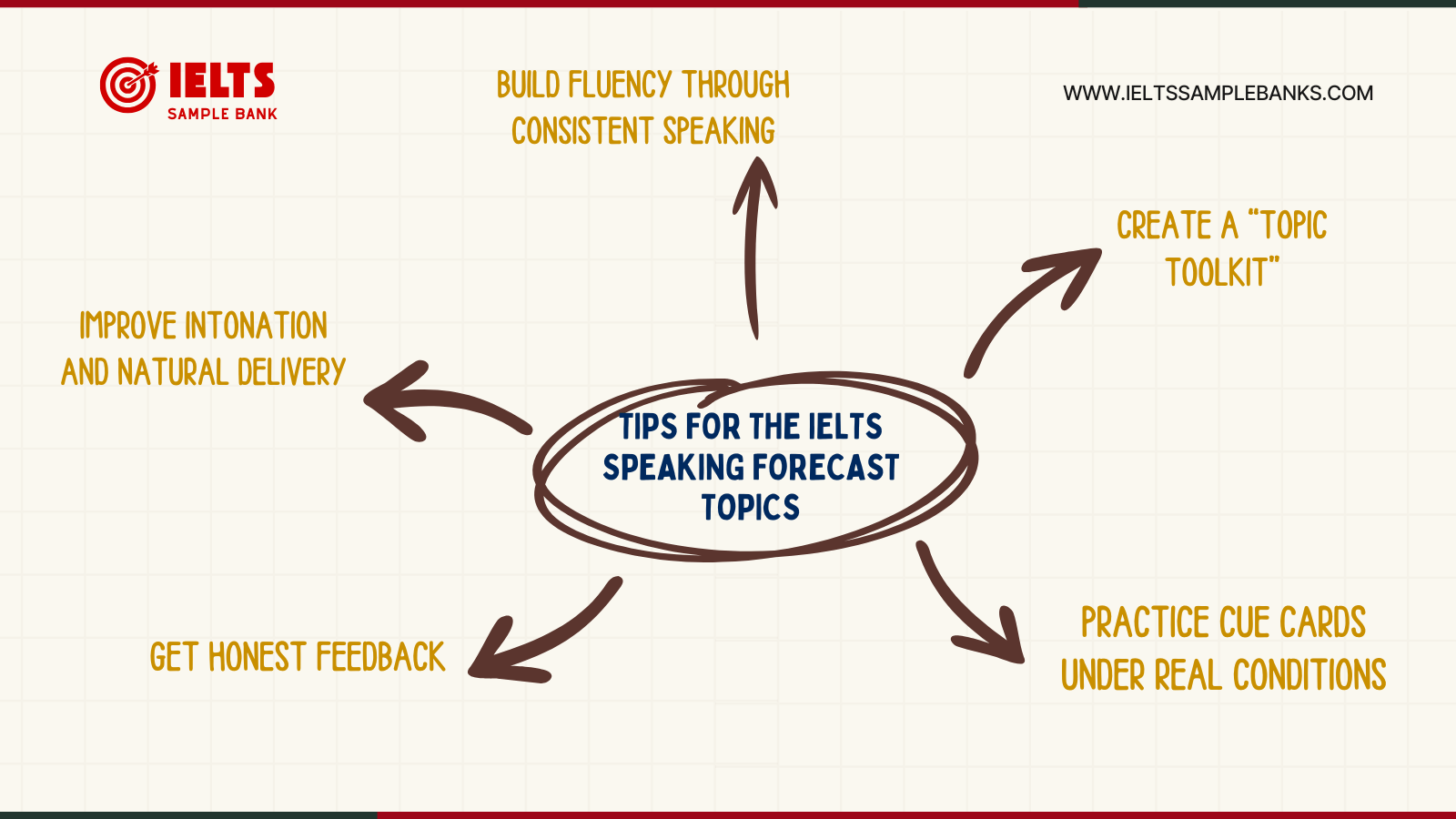
- Build Fluency Through Consistent Speaking: Fluency improves with regular practice, not perfection. Set aside 15–20 minutes daily to speak English—even if it’s just to yourself. Use IELTS Speaking Forecast, cue card apps like IELTS Speaking Assistant or record yourself using your phone. Mimic exam timing: 1 minute prep, 2 minutes speaking. Practice with friends, tutors, or join online speaking clubs like on Telegram or Discord for real-time interaction.
- Create a “Topic Toolkit”: For each common topic in IELTS Speaking Forecast, prepare a few useful phrases, topic-specific vocabulary, and personal examples. For instance, for “books,” collect words like page-turner, memoir, or character-driven. Jot down 1–2 personal stories you can adapt for many questions. This gives you pre-built speaking material that feels natural and flexible.
- Practice Cue Cards Under Real Conditions: Treat cue cards like mini performances. Choose a topic, prep for 1 minute, then speak for 2 minutes without stopping. Record yourself and listen back: Did you cover all points clearly? Was your speech organized? Doing this consistently (even just once a day) builds automatic structure and improves pacing.
- Improve Intonation and Natural Delivery: It’s not just what you say, but how you say it. Work on your tone, rhythm, linking, and emphasis by shadowing TED Talks or IELTS sample videos. Try sounding expressive—this keeps the listener engaged and shows confidence. Use intonation to highlight contrasts, opinions, and transitions naturally.
- Get Honest Feedback: Feedback is essential. Besides IELTS Speaking Forecast, use AI-based IELTS speaking checks, or ask a tutor or learning partner to point out hesitation, repetitive phrases, or weak phrasing. Focus especially on your pacing, clarity, and ability to support your ideas smoothly. Even small improvements will raise your score.
IELTS Speaking Forecast is a Map, Not a Script
The IELTS Speaking Forecast for September to December 2025 offers vital insights into what’s coming next—but don’t treat it as a scriptwriting opportunity. Aim to communicate confidently, not just repeat pre-memorized answers.
The more you personalize your speaking practice while covering high-frequency topics, the more fluent and prepared you’ll feel on test day.