

Understanding and accurately describing natural biological sequences is a core skill tested in IELTS Writing Task 1, particularly when presented with process diagrams. Among these, the life cycle of the honey bee is a recurring visual task that challenges candidates to convey scientific stages using formal, academic language. This in-depth guide provides strategies, advanced vocabulary, model answers, and structural insights to help you confidently approach any diagram outlining the developmental progression of honey bees.
IELTS Writing Task 1 Question – Honey Bee Diagram Analysis
The diagram below shows the life cycle of the honey bee. Write a report for a university lecturer describing the information shown below. Summarise the information by selecting and reporting the main features and make comparisons where relevant. You should write at least 150 words.
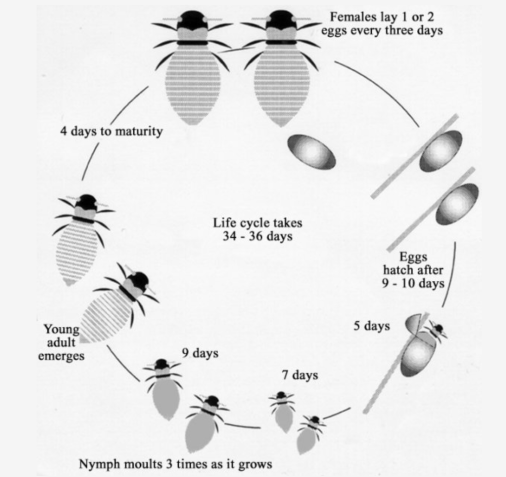
Honey bee diagram requires you to describe a cyclical biological process that demonstrates the transformation of honey bees from eggs to mature adults. The examination expects candidates to identify key stages, note time durations, and highlight significant changes throughout the developmental process.
In process chart task 1, your response should maintain academic tone while presenting information in a logical sequence that reflects the natural progression shown in the bee life cycle diagram.
Life Cycle of Honey Bee Diagram Sample Essays
Band 5-6 Response
The diagram shows how honey bees develop from eggs to adult bees through different stages. This process takes about 34-36 days to complete and happens in a circle.
First, the adult female bee lays eggs that are very small. After 3 days, these eggs become larvae. The larva stage lasts for about 5-7 days where the baby bees grow bigger. During this time, they change their skin three times which is called moulting.
Next, the larvae become pupae after 7-9 days. This stage lasts for about 13 days. In this stage, the bee develops its body parts like wings and legs. The pupae look more like real bees but they cannot move much.
After the pupae stage, young adult bees come out. These bees need about 4 days to become mature adults. When they are mature, the female bees can start laying eggs again and the cycle continues. The whole process shows that honey bees go through complete changes in their body.
Band 6-7 Response
The diagram illustrates the complete life cycle of honey bees, depicting a cyclical process that spans approximately 34-36 days from egg to reproductive adult. The honey bee diagram demonstrates six distinct developmental stages representing complete metamorphosis.
The cycle commences when mature female bees deposit eggs, which remain in this initial stage for precisely three days. Subsequently, the eggs hatch into larvae, entering a growth phase lasting 5-7 days during which they undergo three moulting processes. This larval development represents a critical period where organisms increase substantially in size.
Following the larval phase, organisms transition into pupae, a transformational stage extending 13 days. During pupation, developing bees acquire characteristic adult features including wings and segmented body structure. The diagram life cycle of honey bee shows this as the longest developmental phase.
Young adults emerge after pupation, requiring approximately four days to reach full maturity. Once mature, these adults possess reproductive capabilities, enabling females to lay eggs and perpetuate the cycle. This process demonstrates systematic developmental progression through complete metamorphosis.
Word count: 168
Band 7+ Response
The diagram delineates the comprehensive life cycle of honey bees, illustrating a cyclical metamorphosis comprising six sequential stages spanning 34-36 days. This honey bee life cycle diagram exemplifies complete transformation from reproductive cell to mature organism capable of perpetuating the species.
The developmental sequence initiates with oviposition, where fertilized eggs remain dormant for three days before hatching. The subsequent larval phase encompasses 5-7 days of intensive growth, characterized by three distinct moulting episodes facilitating progressive size increase while maintaining larval morphology.
Transformation continues through pupation, an extended 13-day metamorphic stage during which fundamental anatomical restructuring occurs. Throughout this phase, larvae undergo complete reorganization, developing adult characteristics including compound eyes, functional wings, and reproductive organs. The bee life cycle diagram indicates this represents the most dramatic developmental transition.
Emergence produces young adults requiring four additional days to achieve physiological maturity and reproductive competence. Upon reaching maturity, female bees demonstrate oviposition capability, perpetuating the cyclical process. This sequence exemplifies holometabolous development through distinctly different life stages.
Common Pitfalls When Writing About Life Cycle of Honey Bee Diagrams
Whether describing the life cycle of a honey bee, silkworm, or any biological process in IELTS Task 1, test-takers often fall into avoidable traps. Here are the most frequent issues—and how to fix them:
| Function | Vocabulary Options | Example Applications |
| Describing Stages | Commence
Initiate Undergo Transition Emerge Develop |
The cycle commences with egg deposition |
| Time References | Subsequently
Following During Throughout Upon completion |
Subsequently, larvae enter the growth phase |
| Transformation | Metamorphosis
Transformation Development Maturation Evolution |
The organisms undergo complete metamorphosis |
| Duration | Spanning
Lasting Extending Requiring Taking approximately |
This phase extends over thirteen days |
| Cyclical Process | Perpetuate
Repeat Continue Cyclical Recurring Continuous |
The cycle perpetuates through reproduction |
| Comparison | Whereas
In contrast Comparatively Significantly longer/shorter |
The pupal stage lasts significantly longer than larval development |
Advanced Sentence Structures for Academic Writing
- Complex sentences incorporating multiple clauses effectively demonstrate grammatical range while providing comprehensive information.
- Utilize participial phrases to add descriptive detail without creating overly long sentences in your honey bee diagram essay that might confuse readers.
- Conditional structures can highlight relationships between developmental stages and their outcomes.
- Passive voice constructions appropriately emphasize processes rather than agents, particularly suitable for describing biological phenomena where the focus remains on transformation rather than causation.
However, balance passive constructions with active voice to maintain reader engagement and demonstrate grammatical variety.
Conclusion
Like the bee’s metamorphosis, your Task 1 writing improves through structured practice: overview first, group stages logically, and use precise lexis. Build breadth with related diagrams—Life Cycle of Silkworm, Hydroelectricity, Geothermal, Diagram of Plastic, and Manufacturing of Brick—then apply the same sequencing logic to mixed visuals in IELTS Mix Chart.
For more examiner-style guides and Band 9 model answers, visit IELTS Sample Banks — your trusted source for IELTS Writing Task 1 mastery.